Posts Tagged 'Graphic Filters'


C# How to: Generating Icons from Images

Article Purpose

This illustrates the process of generating files (*.ico) from user specified input . The accompanying Sample Source Code implements a , allowing for easily testing the generation process.

Sample source code

This is accompanied by a sample source code Visual Studio project which is available for download .

Using the sample Application

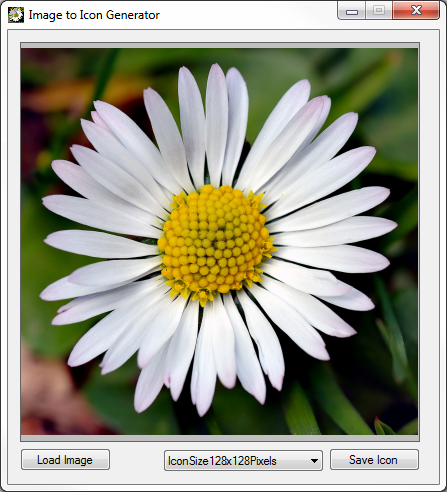
The Sample Application can be used to test/implement the concepts described in this . The user interface enables the user to browse and select an file from the file system, which loads as a scaled preview. In addition, the user can select an size from a list of standard dimensions: 16×16, 24×24, 32×32, 48×48, 64×64, 96×96 and 128×128 pixels. When a user clicks on the “Save Icon” button the sample application generates an in memory based on the specified size converting and scaling the provided input . If an was successfully generated, the in-memory representation will be saved to the file system, based on the filename and file path specified by the user.

The image below is screenshot of the Image to Icon Generator application in action:

Image To Icon Generator

The source features Bellis perennis also known as the common European Daisy (see Wikipedia). The file is licensed under the Creative Commons Attribution-Share Alike 2.5 Generic license. The original can be downloaded from .

The resulting file generated by the sample application:

Generating Icons from Images

Scaling and Aspect Ratio

conform to a set of standard dimensions, all of which equate to a square due to the width and height values being equal. A potential issue exists in that the specified source might not have exact square dimensions. In other words, the width and height values of specified source might differ. The solution lies in creating a square based on the specified source . Consider the concept of a square canvas onto which is drawn the source whilst maintaining its aspect ratio, implementing center alignment from the horizontal and vertical aspect. Listed below is the implementation of an defined as CopyToSquareCanvas, targeting the class.

public static Bitmap CopyToSquareCanvas(this Bitmap sourceBitmap, Color canvasBackground)
{
    int maxSide = sourceBitmap.Width > sourceBitmap.Height ? sourceBitmap.Width : sourceBitmap.Height;

Bitmap bitmapResult = new Bitmap(maxSide, maxSide, PixelFormat.Format32bppArgb);
using (Graphics graphicsResult = Graphics.FromImage(bitmapResult)) { graphicsResult.Clear(canvasBackground);
int xOffset = (sourceBitmap.Width - maxSide) / 2; int yOffset = (sourceBitmap.Height - maxSide) / 2;
graphicsResult.DrawImage(sourceBitmap, new Point(xOffset, xOffset)); }
return bitmapResult; }

The size of the resulting is determined by the source ’s longest side, either width or height. To ensure middle alignment both vertically and horizontally the source is drawn at an offset, determined by the additional buffer area added by the canvas.

Generating the Icon

Once we have created an conforming to exact square dimensions the next step would be to scale said to the desired size. A convenient method of quickly scaling source to icon dimensions comes in the form of creating .

The sample source code defines the enumeration IconSizeDimensions, which serves to provide a developer friendly reference coupled with actual dimension values by means of specifying explicit enumeration values. Consider the following code snippet:

public enum IconSizeDimensions
{
    IconSize16x16Pixels = 16,
    IconSize24x24Pixels = 24,
    IconSize32x32Pixels = 32,
    IconSize48x48Pixels = 48,
    IconSize64x64Pixels = 64,
    IconSize96x96Pixels = 96,
    IconSize128x128Pixels = 128
}

The crux of this and sample source code can considered to be the definition of the CreateIcon , which targets the class. The definition is as follows:

public static Icon CreateIcon(this Bitmap sourceBitmap, IconSizeDimensions iconSize)
{
    Bitmap squareCanvas = sourceBitmap.CopyToSquareCanvas(Color.Transparent);
    squareCanvas = (Bitmap)squareCanvas.GetThumbnailImage((int)iconSize, (int)iconSize, null, new IntPtr());

Icon iconResult = Icon.FromHandle(squareCanvas.GetHicon());
return iconResult; }

As discussed the first step is to ensure that the source conforms to square dimensions, implemented here by invoking the CopyToSquareCanvas . Next the source code implements scaling by creating a of which the size is based on the specified IconSizeDimensions value. The method returns a handle to an in the form of an , which serves as a parameter to the static method, which returns an instance of the class.

The Implementation

When the user clicks the “Save” button the Sample Application will present the user with a file save dialog. After the user specifies a file name and file path the Sample Application creates a reference of the source by casting the picturebox’s property to type .

private void btnSaveIcon_Click(object sender, EventArgs e)
{
    if (picSource.Image != null)
    {
        SaveFileDialog sfd = new SaveFileDialog();
        sfd.Title = "Specify a file name and file path";
        sfd.Filter = "Icon Files(*.ico)|*.ico"; 
if (sfd.ShowDialog() == System.Windows.Forms.DialogResult.OK) { System.Drawing.Icon tempIcon = ((Bitmap)picSource.Image).CreateIcon( (IconSizeDimensions)cmbIconSize.SelectedItem);
using (StreamWriter streamWriter = new StreamWriter(sfd.FileName, false)) { tempIcon.Save(streamWriter.BaseStream);
streamWriter.Flush(); streamWriter.Close(); } } } }

When the CreateIcon is invoked, the dimensions selected through the user interface will be passed as a parameter. The last step performed involves persisting the in-memory data to the file system.

C# How to: Bitmap Colour Substitution implementing thresholds

Article Purpose

This article is aimed at detailing how to implement the process of substituting the colour values that form part of a image. Colour substitution is implemented by means of a threshold value. By implementing a threshold a range of similar colours can be substituted.

Sample source code

This article is accompanied by a sample source code Visual Studio project which is available for download here.

Using the sample Application

The provided sample source code builds a Windows Forms application which can be used to test/implement the concepts described in this article. The sample application enables the user to load an file from the file system, the user can then specify the colour to replace, the replacement colour and the threshold to apply. The following image is a screenshot of the sample application in action.

BitmapColourSubstitution_Scaled

The scenario detailed in the above screenshot shows the sample application being used to create an where the sky has more of a bluish hue when compared to the original .

Notice how replacement colour does not simply appear as a solid colour applied throughout. The replacement colour gets implemented matching the intensity of the colour being substituted.

The colour filter options:

FilterOptions

The colour to replace was taken from the original , the replacement colour is specified through a colour picker dialog. When a user clicks on either displayed, the colour of the pixel clicked on sets the value of the replacement colour. By adjusting the threshold value the user can specify how wide or narrow the range of colours to replace should be. The higher the threshold value, the wider the range of colours that will be replaced.

The resulting image can be saved by clicking the “Save Result” button. In order to apply another colour substitution on the resulting image click the button labelled “Set Result as Source”.

Colour Substitution Filter Data

The sample source code provides the definition for the ColorSubstitutionFilter class. The purpose of this class is to contain data required when applying colour substitution. The ColorSubstitutionFilter class is defined as follows:

public class ColorSubstitutionFilter
{
    private int thresholdValue = 10;
    public int ThresholdValue
    {
        get { return thresholdValue; }
        set { thresholdValue = value; }
    }

private Color sourceColor = Color.White; public Color SourceColor { get { return sourceColor; } set { sourceColor = value; } }
private Color newColor = Color.White; public Color NewColor { get { return newColor; } set { newColor = value; } } }

To implement a colour substitution filter we first have to create an object instance of type ColorSubstitutionFilter. A colour substitution requires specifying a SourceColor, which is the colour to replace/substitute and a NewColour, which defines the colour that will replace the SourceColour. Also required is a ThresholdValue, which determines a range of colours based on the SourceColor.

Colour Substitution implemented as an Extension method

The sample source code defines the ColorSubstitution extension method which targets the class. Invoking the ColorSubstitution requires passing a parameter of type ColorSubstitutionFilter, which defines how colour substitution is to be implemented. The following code snippet contains the definition of the ColorSubstitution method.

public static Bitmap ColorSubstitution(this Bitmap sourceBitmap, ColorSubstitutionFilter filterData)
{
    Bitmap resultBitmap = new Bitmap(sourceBitmap.Width, sourceBitmap.Height, PixelFormat.Format32bppArgb);

BitmapData sourceData = sourceBitmap.LockBits(new Rectangle(0, 0, sourceBitmap.Width, sourceBitmap.Height), ImageLockMode.ReadOnly, PixelFormat.Format32bppArgb); BitmapData resultData = resultBitmap.LockBits(new Rectangle(0, 0, resultBitmap.Width, resultBitmap.Height), ImageLockMode.WriteOnly, PixelFormat.Format32bppArgb);
byte[] resultBuffer = new byte[resultData.Stride * resultData.Height]; Marshal.Copy(sourceData.Scan0, resultBuffer, 0, resultBuffer.Length);
sourceBitmap.UnlockBits(sourceData);
byte sourceRed = 0, sourceGreen = 0, sourceBlue = 0, sourceAlpha = 0; int resultRed = 0, resultGreen = 0, resultBlue = 0;
byte newRedValue = filterData.NewColor.R; byte newGreenValue = filterData.NewColor.G; byte newBlueValue = filterData.NewColor.B;
byte redFilter = filterData.SourceColor.R; byte greenFilter = filterData.SourceColor.G; byte blueFilter = filterData.SourceColor.B;
byte minValue = 0; byte maxValue = 255;
for (int k = 0; k < resultBuffer.Length; k += 4) { sourceAlpha = resultBuffer[k + 3];
if (sourceAlpha != 0) { sourceBlue = resultBuffer[k]; sourceGreen = resultBuffer[k + 1]; sourceRed = resultBuffer[k + 2];
if ((sourceBlue < blueFilter + filterData.ThresholdValue && sourceBlue > blueFilter - filterData.ThresholdValue) &&
(sourceGreen < greenFilter + filterData.ThresholdValue && sourceGreen > greenFilter - filterData.ThresholdValue) &&
(sourceRed < redFilter + filterData.ThresholdValue && sourceRed > redFilter - filterData.ThresholdValue)) { resultBlue = blueFilter - sourceBlue + newBlueValue;
if (resultBlue > maxValue) { resultBlue = maxValue;} else if (resultBlue < minValue) { resultBlue = minValue;}
resultGreen = greenFilter - sourceGreen + newGreenValue;
if (resultGreen > maxValue) { resultGreen = maxValue;} else if (resultGreen < minValue) { resultGreen = minValue;}
resultRed = redFilter - sourceRed + newRedValue;
if (resultRed > maxValue) { resultRed = maxValue;} else if (resultRed < minValue) { resultRed = minValue;}
resultBuffer[k] = (byte)resultBlue; resultBuffer[k + 1] = (byte)resultGreen; resultBuffer[k + 2] = (byte)resultRed; resultBuffer[k + 3] = sourceAlpha; } } }
Marshal.Copy(resultBuffer, 0, resultData.Scan0, resultBuffer.Length); resultBitmap.UnlockBits(resultData);
return resultBitmap; }

The ColorSubstitution method can be labelled as due to its implementation. Being implies that the source/input data will not be modified, instead a new instance will be created reflecting the source data as modified by the operations performed in the particular method.

The first statement defined in the ColorSubstitution method body instantiates an instance of a new , matching the size dimensions of the source object. Next the method invokes the method on the source and result instances. When invoking the underlying data representing a will be locked in memory. Being locked in memory can also be described as signalling/preventing the Garbage Collector to not move around in memory the data being locked. Invoking results in the Garbage Collector functioning as per normal, moving data in memory and updating the relevant memory references when required.

The source code continues by copying all the representing the source to an array of bytes that represents the resulting . At this stage the source and result s are exactly identical and as yet unmodified. In order to determine which pixels based on colour should be modified the source code iterates through the byte array associated with the result .

Notice how the for loop increments by 4 with each loop. The underlying data represents a 32 Bits per pixel Argb , which equates to 8 bits/1 representing an individual colour component, either Alpha, Red, Green or Blue. Defining the for loop to increment by 4 results in each loop iterating 4 or 32 bits, in essence 1 pixel.

Within the for loop we determine if the colour expressed by the current pixel adjusted by the threshold value forms part of the colour range that should be updated. It is important to remember that an individual colour component is a byte value and can only be set to a value between 0 and 255 inclusive.

The Implementation

The ColorSubstitution method is implemented by the sample source code  through a Windows Forms application. The ColorSubstitution method requires that the source specified must be  formatted as a 32 Bpp Argb . When the user loads a source image from the file system the sample application attempts to convert the selected file by invoking the Format32bppArgbCopy which targets the class. The definition is as follows:

public static Bitmap Format32bppArgbCopy(this Bitmap sourceBitmap)
{
    Bitmap copyBitmap = new Bitmap(sourceBitmap.Width, sourceBitmap.Height, PixelFormat.Format32bppArgb);

using (Graphics graphicsObject = Graphics.FromImage(copyBitmap)) { graphicsObject.CompositingQuality = System.Drawing.Drawing2D.CompositingQuality.HighQuality; graphicsObject.InterpolationMode = System.Drawing.Drawing2D.InterpolationMode.HighQualityBicubic; graphicsObject.PixelOffsetMode = System.Drawing.Drawing2D.PixelOffsetMode.HighQuality; graphicsObject.SmoothingMode = System.Drawing.Drawing2D.SmoothingMode.HighQuality;
graphicsObject.DrawImage(sourceBitmap, new Rectangle(0, 0, sourceBitmap.Width, sourceBitmap.Height), new Rectangle(0, 0, sourceBitmap.Width, sourceBitmap.Height), GraphicsUnit.Pixel); }
return copyBitmap; }

Colour Substitution Examples

The following section illustrates a few examples of colour substitution result . The source image features Bellis perennis also known as the common European Daisy (see Wikipedia). The image file is licensed under the Creative Commons Attribution-Share Alike 2.5 Generic license. The original image can be downloaded here. The following image is a scaled down version of the original:

Bellis_perennis_white_(aka)_scaled

Light Blue Colour Substitution

Colour Component Source Colour Substitute Colour
Red   255   121
Green   223   188
Blue   224   255

Daisy_light_blue

Medium Blue Colour Substitution

Colour Component Source Colour Substitute Colour
Red   255   34
Green   223   34
Blue   224   255

Daisy_medium_blue

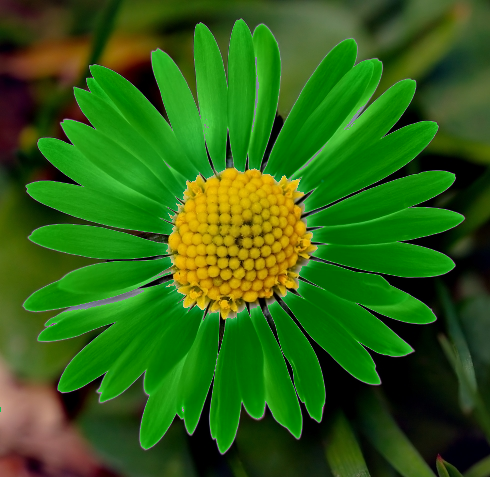
Medium Green Colour Substitution

Colour Component Source Colour Substitute Colour
Red   255   0
Green   223   128
Blue   224   0

Daisy_medium_green

Purple Colour Substitution

Colour Component Source Colour Substitute Colour
Red   255   128
Green   223   0
Blue   224   255

Daisy_purple

Related Articles and Feedback

Feedback and questions are always encouraged. If you know of an alternative implementation or have ideas on a more efficient implementation please share in the comments section.

I’ve published a number of articles related to imaging and images of which you can find URL links here:


Dewald Esterhuizen

Unknown's avatar

Blog Stats

  • 895,111 hits

Enter your email address to follow and receive notifications of new posts by email.

Join 91 other subscribers

Archives

RSS SoftwareByDefault on MSDN

  • An error has occurred; the feed is probably down. Try again later.